
How Do You Do Keyword Research for Google Ads as a Wellness Practitioner?
How Do You Do Keyword Research for Google Ads as a Wellness Practitioner?
If you're a therapist, chiropractor, yoga instructor, or life coach trying to get more clients through Google Ads, keyword research might sound intimidating.
But here's the truth: it's not about being tech-savvy. It's about thinking like your ideal client when they're online searching for help.
Think of it this way—you wouldn't create a treatment plan without understanding what's bothering your client, right? Keyword research works the same way.
You need to know exactly what words people type into Google when they're looking for someone like you.
Get this right, and you'll attract high-intent clients who are ready to book. Get it wrong, and you'll waste money on clicks that go nowhere.
Let's walk through how to do keyword research that actually works in real time.
Why Should You Care About Keyword Research?
Good keyword research does three things:
Saves you money – You only pay for clicks from people who actually want your services
Improves your targeting – You show up for the right searches at the right time
Attracts ready-to-book clients – People searching "book anxiety therapist San Diego" are much closer to booking than someone searching "what is therapy"
Google understands the unique set of preconceived notions that each user possesses and how this affects the way they search for services and products online.
Here's the thing: people search in all kinds of ways. One person types "best life coach near me" while another searches "top chiropractor in Lakeside."
When you combine these different search patterns with how Google's ad auction works, you quickly realize that choosing the right keywords can make or break your campaign.
To get ahead with Google ads, you need to be a savvy researcher and wily detective all rolled into one.
Sadly, most people give up on Google ads because they blow through their budget faster than they can say "paid ads" or they just don't get the results they want.
Thankfully, if you get the keyword part right from the outset, not only will your campaign perform better, but over time, you’ll be able to scale your campaign without ever having to worry about spending too much.
Remember, every time someone clicks on your ad, Google adds more dollars to your bill. You want your ads to show up for the right types of searches. So before you do anything else, make sure you follow these steps.
Always Think Like a Client, Not a Practitioner
Start by listing phrases your clients would actually type into Google. This means using their language, not yours.
For example:
Instead of "cognitive behavioral therapy," think "therapist for anxiety"
Instead of "spinal adjustment," think "chiropractor for back pain"
Instead of "mindfulness coaching," think "life coach for stress"
Try these examples:
"Back pain chiropractor near me"
"Trauma therapist Vancouver"
"Life coach for burnout Austin"
"Beginner yoga classes Toronto"
"EMDR therapist San Francisco"
Also, consider whether people know what they need (solution-aware) or just know they have a problem (problem-aware).
Someone searching "sciatica treatment Chicago" knows their problem. Someone searching "chiropractor Chicago" knows the solution they want.
What's the Difference Between Search Intent Types?
Not all searches are equal. Understanding what people want helps you choose better keywords.
Informational searches – People learning about something
Example: "What is EMDR therapy?"
These rarely lead to bookings
Commercial searches – People comparing options
Examples: "Best chiropractor in Seattle," "yoga classes Denver"
These are warm leads
Transactional searches – People ready to take action
Examples: "Book anxiety therapist San Diego," "schedule chiropractor appointment Brooklyn"
These are hot leads
For wellness practitioners, focus most of your budget on commercial and transactional keywords. These people are ready to choose someone and book.
How Do You Use Google Keyword Planner to Find More Keywords?
Google Keyword Planner is free and built into Google Ads. Here's the simple workflow:
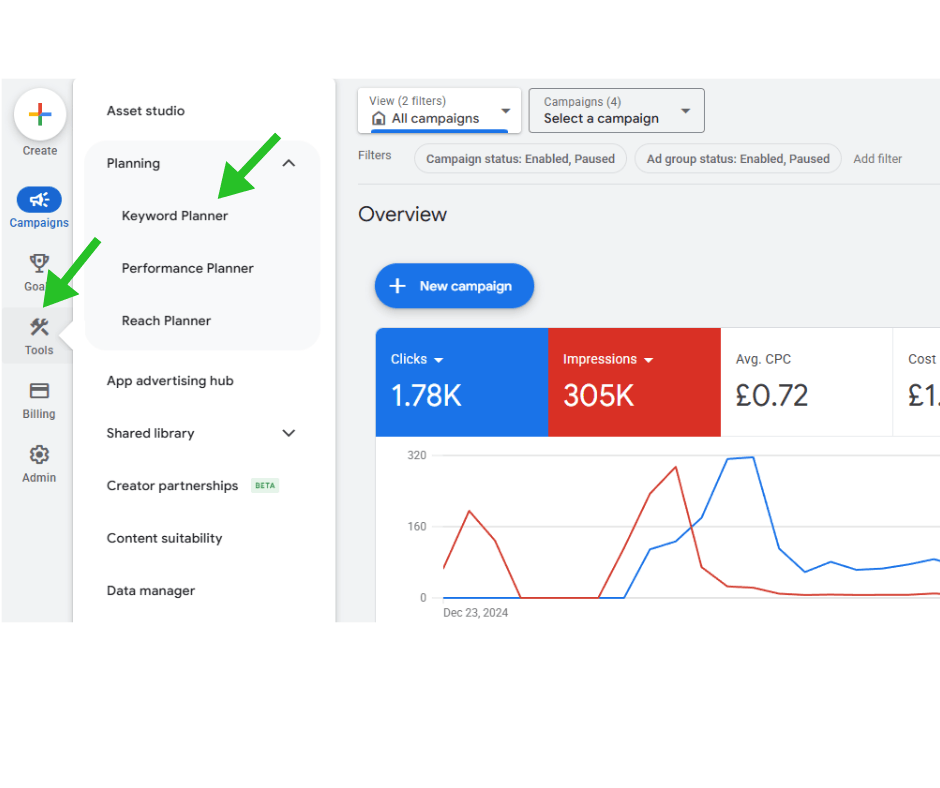
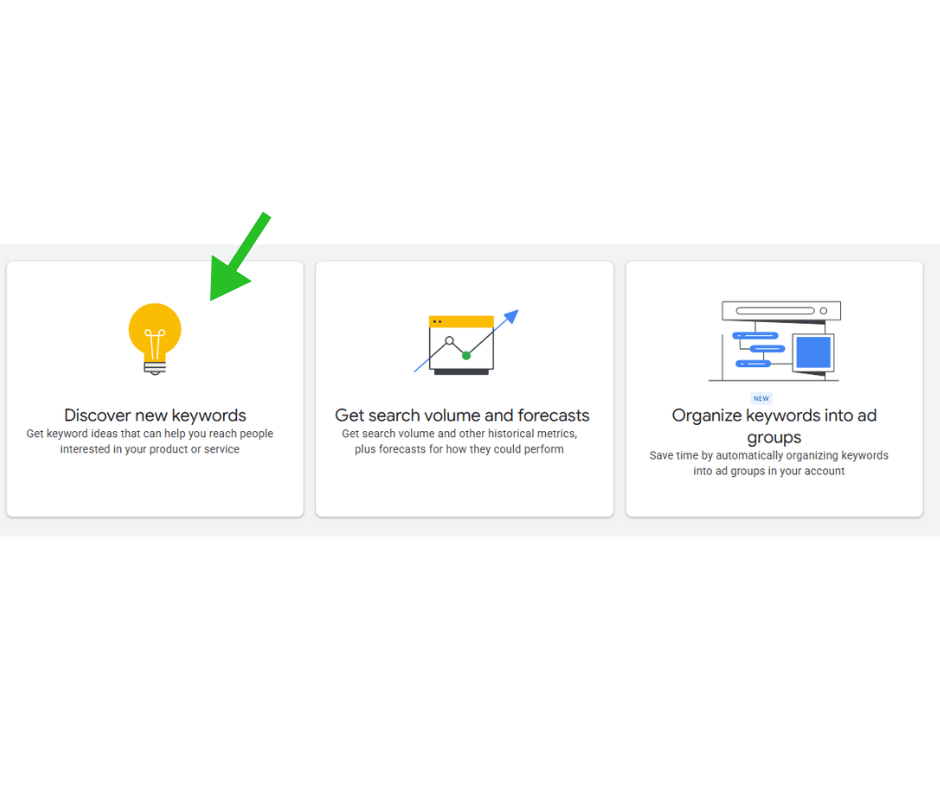
Click "Discover new keywords"
Type in a few basic keywords (like "massage therapist Phoenix")
Review what Google shows you
You'll discover variations you hadn't thought of. For instance:
Typing "physical therapist Phoenix" might reveal "deep tissue massage Phoenix" or "sports massage Phoenix"
Searching "acupuncture Calgary" might show "fertility acupuncture Calgary" or "acupuncture for back pain Calgary"
Pay attention to the cost-per-click (CPC) numbers. Higher CPC usually means more competition, but also more valuable searches.
If "anxiety therapist" costs $12 per click in your city, it's because people searching that term often book appointments.
What Can You Learn from Checking Out Your Competitors?
Do a quick competitor check by Googling phrases like "therapist Dallas," "chiropractor Portland," or "yoga studio Miami."
Look at:
What keywords appear in their ad headlines
What services they highlight on their landing pages
What gaps they're missing
For example, you might notice everyone bids on "sports chiropractor Houston," but nobody targets "pregnancy chiropractor Houston." That's your opportunity.
How Should You Build Your Keyword List?
Mix broad and long-tail keywords together.
Broad keywords (higher volume, more competition):
"Therapist near me"
"Yoga studio"
"Chiropractor"
Long-tail keywords (lower volume, better conversion):
"Couples therapist Minneapolis"
"Hot yoga classes Vancouver"
"Sciatica chiropractor Boston"
"Holistic life coach San Francisco"
Long-tail keywords convert better for wellness practitioners because they're specific. Someone searching "chiropractor" could want anything. Someone searching "sciatica chiropractor Boston" knows exactly what they need.
What's the Best Way to Organize Your Keywords?
Group related keywords into themed ad groups. Think of each ad group like a treatment room—each one focuses on a specific concern.
Examples:
For chiropractors:
Group 1: Sciatica relief, lower back pain, sciatica chiropractor Phoenix
Group 2: Neck pain, headaches, neck pain chiropractor Phoenix
Group 3: Sports injuries, sports chiropractor Phoenix
For therapists:
Group 1: Anxiety therapy, anxiety therapist Los Angeles, therapy for anxiety
Group 2: Couples counseling Toronto, marriage therapist Toronto
Group 3: Trauma therapy, trauma therapist Los Angeles, EMDR therapy
For yoga studios:
Group 1: Beginner yoga Chicago, yoga for beginners
Group 2: Hot yoga Vancouver, heated yoga classes
Group 3: Private yoga instructor Dallas, one-on-one yoga
Why Does Your Landing Page Matter?
Never send everyone to your homepage. Match each ad group to a specific landing page.
If your ad group is "anxiety therapist Denver," link to a page specifically about anxiety therapy. If your ad group is "chiropractor for back pain Atlanta," link to your back pain treatment page.
This alignment improves your Quality Score (Google's rating of your ad), creates better client experiences, and lowers your cost per click.
How Do You Write Ads That Include Your Keywords Naturally?
Use your keywords in your ad headlines, but keep them natural and helpful:
"Anxiety Therapist in Austin — Book a Free Consultation"
"Back Pain Chiropractor in Philadelphia — Same Week Appointments"
"Beginner Yoga Classes Vancouver — Join Today"
Including your city and service type improves relevance and helps people know exactly what you offer before they click.
What Metrics Should You Track?
Once your ads are running, watch these three things:
Click-through rate (CTR) – Are people clicking your ads? Quality Score – Does Google trust your ad is relevant? Conversions – Are people booking sessions?
Check which keywords perform well and which don't. If a keyword gets clicks but no bookings, pause it. If a keyword gets great results, add similar ones.
Remember: gathering data takes time. Give each keyword at least 30 clicks before deciding it doesn't work.
When Should You Update Your Keyword List?
Review and refine your keywords monthly. As you collect data, you'll discover what works.
For example:
If "acupuncture Seattle" costs too much but "acupuncture for migraines Seattle" converts better, shift your budget
If "life coach Toronto" is too broad, test "career life coach Toronto" or "life coach for anxiety Toronto"
This is normal. Even experienced advertisers optimize constantly.
Final Thoughts: Start Small and Build Confidence
Keyword research doesn't require technical expertise. It requires thinking like the clients you want to help.
Here's your simple path forward:
Brainstorm what clients would search for
Use Google Keyword Planner to expand your list
Organize keywords into focused ad groups
Match each ad group to the right landing page
Track results and improve based on real data
Start with 10-15 keywords in 2-3 ad groups. Learn what works. Then grow from there


© All rights reserved